Whiskey Terms Every Enthusiast Should Know – Clone
Aug 4, 2026
Key Takeaways
- Whiskey terminology can tell you how a spirit was made, matured, bottled and served.
- Production terms such as malt, grist, wort and still describe the steps that transform grain into whiskey.
- Words such as cask strength, expression, neat and finish help explain what is in the bottle and how it may taste in the glass.
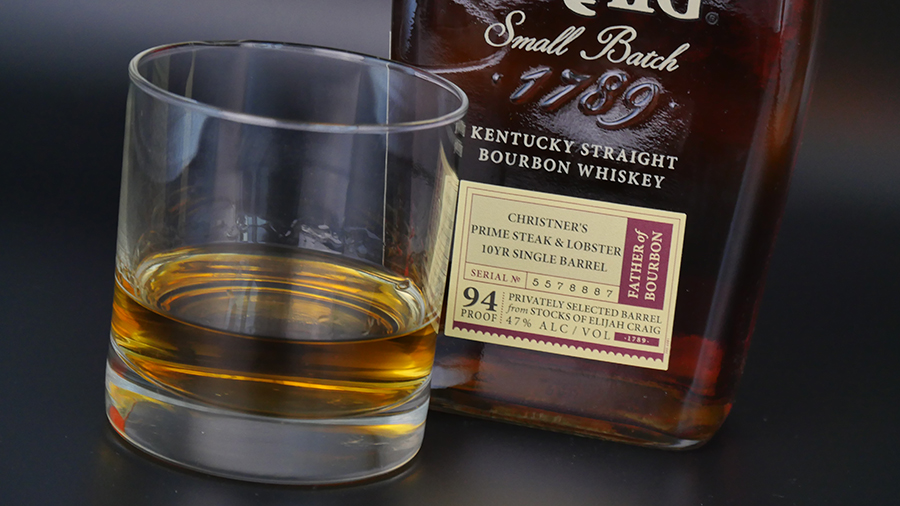
- Christner’s whiskey collection, including exclusive private barrel bourbons, gives guests many ways to experience these distinctions firsthand.
Whether you’re considering a rare single malt, a Kentucky bourbon or one of Christner’s exclusive private barrel selections, whiskey can come with a language all its own. The words used on labels and tasting menus reveal important details about how a spirit was produced, where it came from and what you may notice when you taste it.
You don’t have to be an expert to use that information. This glossary explains essential terms related to whiskey production, bottling and serving so you can read a label more easily, compare different selections and order according to your own preferences.
The phrase reflects the spirit’s centuries-old history in Ireland and Scotland. Its pronunciation and spelling changed over time, eventually giving English speakers the word used today.
From Grain to Spirit
Whiskey begins with grain, water and yeast, but the choices made at each stage help determine the spirit’s eventual character. These terms follow the process from preparing the grain through fermentation and distillation.
Malt
Malt is grain that has been soaked in water and allowed to germinate under controlled conditions before being dried to stop further growth. Barley is the grain most commonly malted for whiskey. Malting makes the grain’s starches available for conversion into the fermentable sugars needed to produce alcohol.
Grist
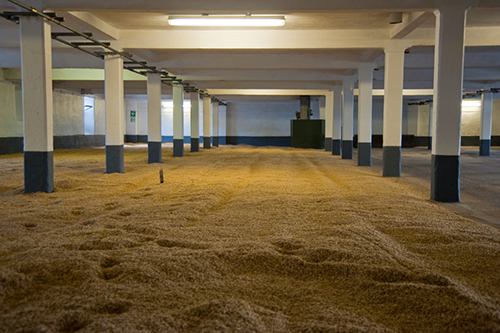
Grist is the coarse mixture created when malted grain is milled in preparation for mashing.
Why Grist Matters
Creating grist does more than break malted grain into smaller pieces. Milling exposes the starch-rich interior while preserving enough of the husk to help filter the liquid during mashing.
The size and consistency of the grist affect how efficiently hot water can extract the sugars needed for fermentation. If it is ground too finely or too coarsely, the next stage may not work as intended.
Wort
Wort is the sweet liquid produced when hot water extracts fermentable sugars from ground grain. After the spent grain is removed, yeast is added to the wort so fermentation can begin.
Ethanol
Ethanol is the type of alcohol created when yeast ferments sugars. It is the principal alcohol present in whiskey and other alcoholic beverages.
Feints
Feints are the portion collected near the end of a distillation run, after the desired middle cut has been separated. They contain less alcohol and more heavy compounds than the middle cut, so distillers commonly set them aside to be redistilled in a later batch.
Pot Still
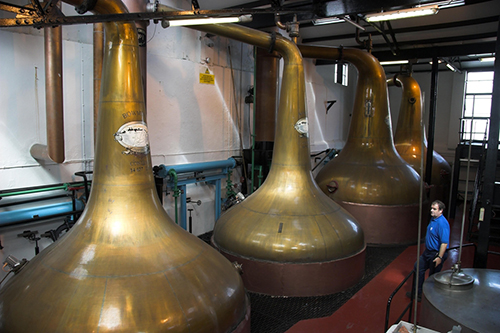
A pot still is a rounded distilling vessel with a narrow neck that processes one batch of fermented liquid at a time. As the liquid is heated, alcohol and other volatile compounds rise as vapor before being condensed back into liquid. The still’s shape influences which compounds continue into the collected spirit, making its design an important part of a distillery’s signature character. Single malt Scotch whisky is distilled in copper pot stills.
Pot Still vs. Column Still
Pot and column stills perform the same essential task, but they handle the distillation process differently. Their operation affects production style, alcohol concentration and the character retained in the resulting spirit.
Pot Still
Because a pot still must be emptied and prepared between runs, it supports a hands-on batch process. Pot distillation generally carries more flavor compounds into the new make spirit, although still shape, cut points and repeated distillation also affect the result.
- Operates in individual batches
- Can retain more robust flavor compounds
- Common in Scotch malt and Irish whiskey production
- Requires each run to be monitored and collected separately
Column Still
A column still can receive fermented liquid continuously as it separates alcohol across a series of internal plates. It generally produces spirit efficiently and at a higher proof, which often results in a lighter profile than traditional pot distillation.
- Supports continuous distillation
- Often creates a lighter spirit
- Widely used for grain whiskey and American whiskey production
- Provides efficient and consistent output
Peaty
Peaty describes the smoky, earthy or medicinal character associated with whiskey made from grain exposed to peat smoke. During malting, peat may be burned as the barley is dried, allowing smoke compounds to settle into the grain before fermentation and distillation. The type of peat used and the length of exposure can influence the character of the finished whisky.
New Make Spirit
Before a distilled spirit enters a cask to mature, it is known as new make spirit. This clear liquid already carries flavors created by the grain, fermentation and distillation. Time in wood will add color and introduce new flavors while changing those already present.
Whiskey vs. Whisky
The difference between whiskey and whisky is primarily a matter of regional spelling. Producers in Ireland and the United States generally use the spelling with an “e,” while producers in Scotland, Canada and Japan usually leave it out.
The spelling doesn’t indicate quality or a particular flavor. It generally reflects the conventions of the country where the spirit was produced, although individual brands may make their own stylistic choice.
From the Barrel to the Bottle
Maturation isn’t the final step. Producers still have to decide which barrels to use, whether to combine them and how to bring the resulting whiskey to bottling strength. These terms describe some of the choices made between the cask and the finished bottle.
Small Batch
Small batch generally describes whiskey created from a limited group of barrels rather than a brand’s full inventory. Because the term doesn’t have a uniform legal definition in the United States, one producer’s “small batch” may be much larger than another’s.
Cask Strength
Cask-strength whiskey is bottled at or close to the proof at which it leaves the barrel, with little or no water added to reduce its alcohol content. It usually has a higher proof and more concentrated profile than the same whiskey bottled at a standard strength. Drinkers may enjoy it as poured or add water according to their preference.
Expression
An expression is a particular whiskey released by a distillery or brand. Expressions from the same producer may differ in age, proof, mash bill, cask type, finish or other production details.
Master Blender
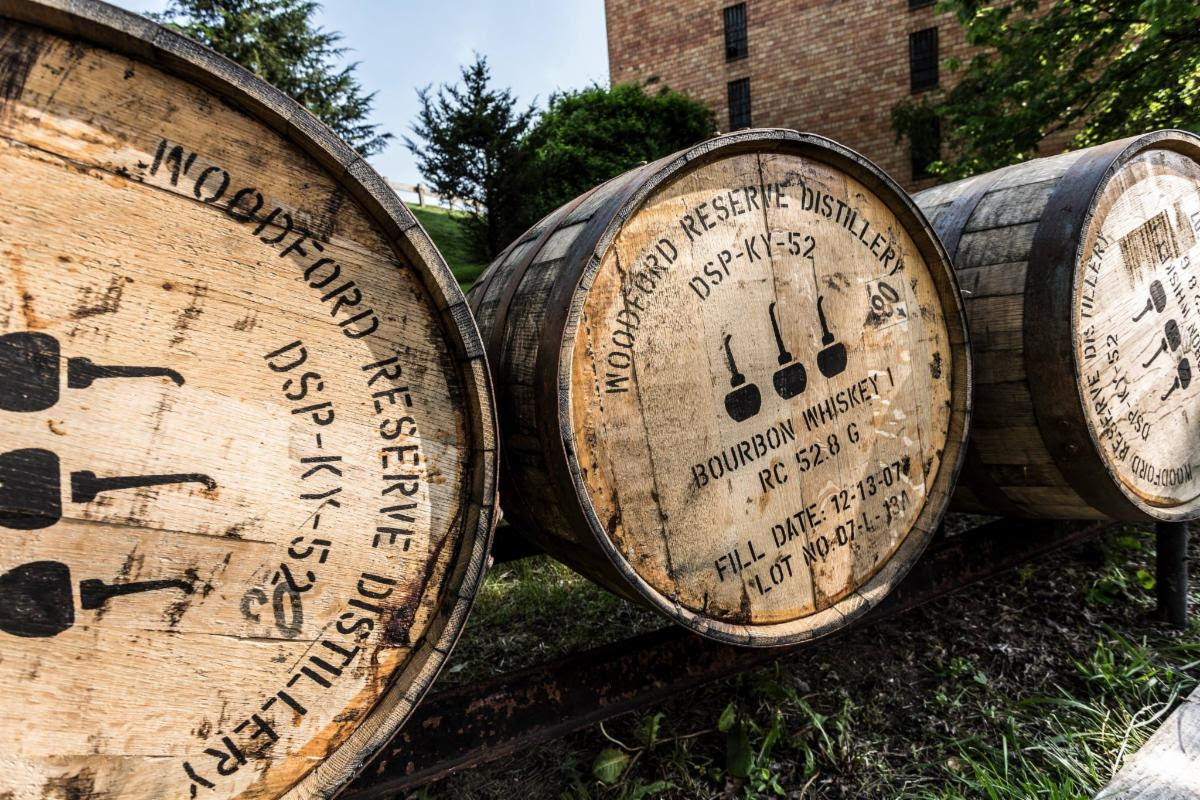
A master blender selects and combines whiskeys to achieve a desired flavor profile or maintain consistency from one release to the next. This role is distinct from that of a master distiller, who oversees distillation and broader production decisions. At some distilleries, however, one person may hold both responsibilities.
The Art of Blending
Many whiskeys are assembled from multiple barrels rather than bottled from just one. A master blender tastes and evaluates individual barrels before combining selections that complement one another or match an established house profile.
Age, warehouse location and differences in the wood can cause barrels filled with the same new make spirit to mature differently. The blender works with those variations to create the intended result in the bottle.
Explore Whiskey One Pour at a Time
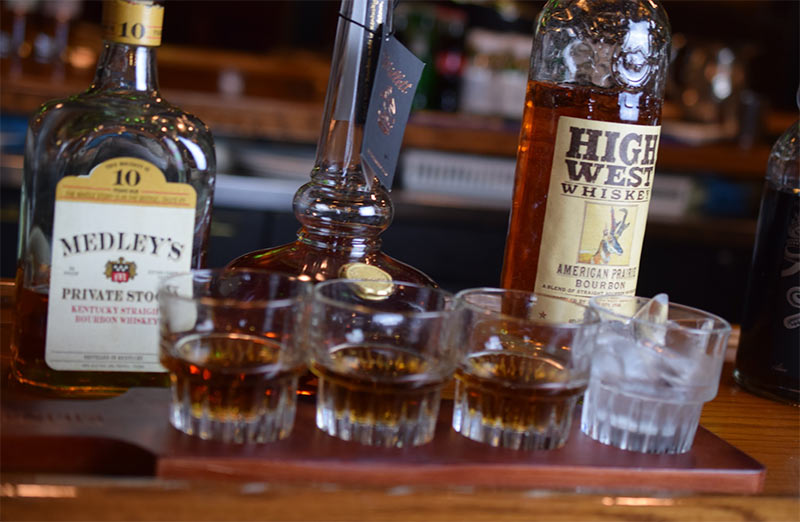
At Christner’s Prime Steak & Lobster, a curated whiskey flight lets you apply these terms as you compare pours side by side. Notice how the aroma, body and finish change from one selection to the next, then decide which characteristics you enjoy most.
Understanding the Language of Every Pour
Some whiskey terms describe what happens after you choose a bottle. Knowing how serving styles differ and how tasters describe a whiskey can help you communicate what you enjoy. Even the type of glass you choose can affect how its aromas reach your nose.
Dram
A dram is an informal term for a small serving of whiskey, especially in Scotland. It does not indicate one precise modern measurement and is often used simply to describe a modest pour.
Neat
Neat whiskey is poured directly into the glass without ice, added water or mixers. This serving style lets you taste the whiskey at its bottled proof and experience its aromas without dilution. A glass with a narrower opening can concentrate those aromas, while a wider tumbler allows them to disperse more quickly.

On the Rocks
Whiskey served on the rocks is poured over ice. As the ice melts, it chills and gradually dilutes the spirit. This can soften the perception of alcohol and change which flavors stand out, although colder temperatures may also make some aromas less noticeable.
Heather
Heather is a flowering shrub found across the Scottish landscape. In tasting notes, the term generally doesn’t mean heather was used as an ingredient. Instead, it suggests a floral, herbal or gently earthy aroma that reminds the taster of the plant.
Finish
The finish is the flavor and sensation that remain after you swallow whiskey. It may fade quickly or linger, and it can differ noticeably from the whiskey’s first taste. Describing the finish as short or long isn’t automatically a judgment of quality; it simply explains how long those final impressions remain.
Continue Exploring the World of Whiskey
Now that you know the essential vocabulary, take a closer look at the distinctions behind different bottles and serving experiences. These guides explain what qualifies a whiskey as bourbon, how to approach a tasting and why the construction of the barrel matters.
Discover Your Next Whiskey at Christner’s
Reserve your table to enjoy a curated whiskey flight, revisit a familiar favorite or choose an exclusive Christner’s private barrel selection.
For informational purposes only.